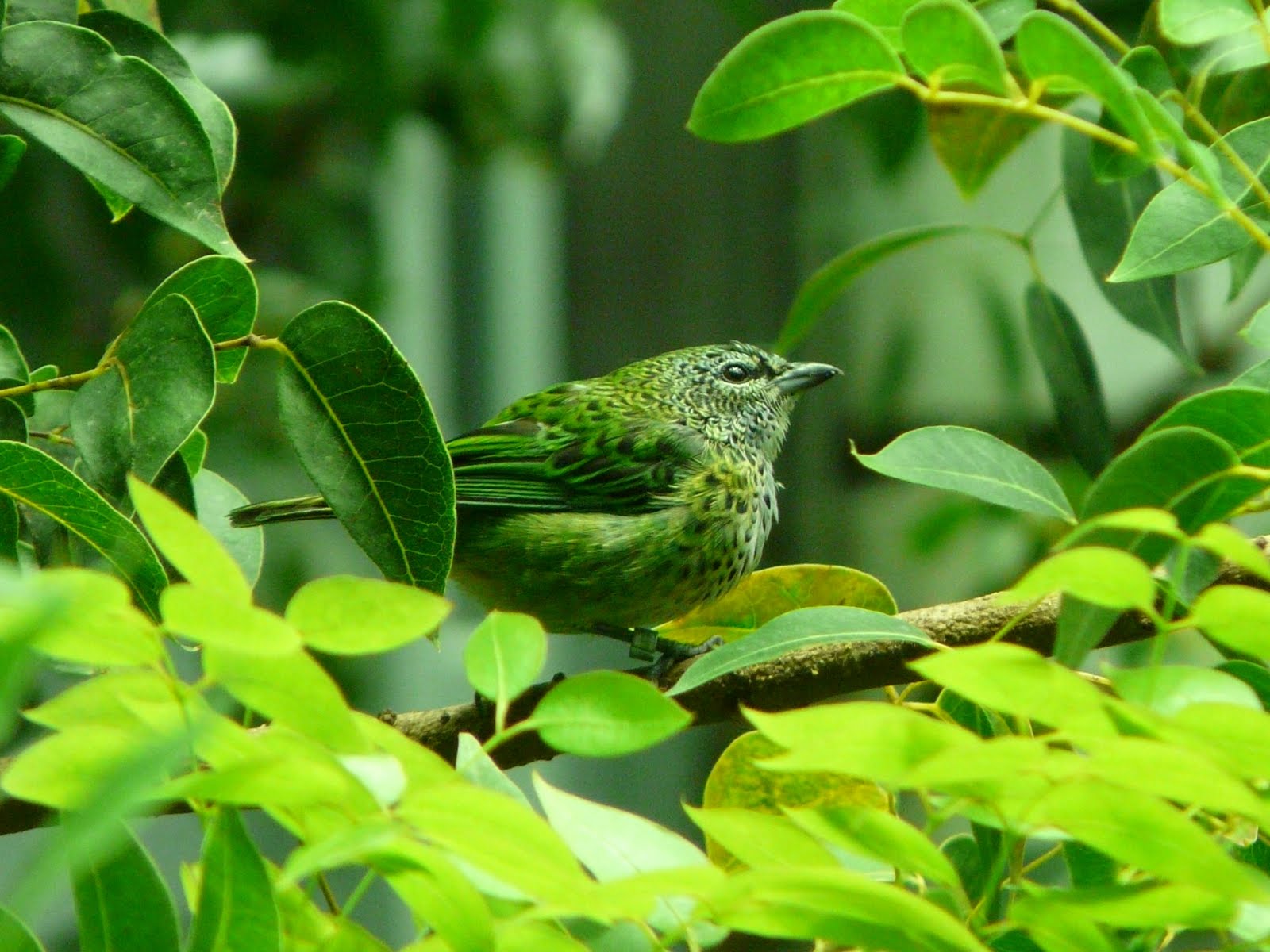
". . . Females, having a more suspicious and careful nature, feeds with her eyes scanning the horizon for the slightest hint of danger."
Monday, March 18, 2013
Catching Sunlight
At the bottom of the pool,
A sliver of light shimmers.
I try to stand on it, to be in it, to feel its warmth. In front of it
there is regular blue,
behind it and sideways there
is regular blue.
How can I be in it? The change
in temperature is so slight,
but I feel it and I crave it
and I stare at it, it looks
so bright. Should I fix myself on it and
embrace its fleeting presence?
or, enter into the expanse and forget about its shine, and how it brightens
a moment?
That shifting light reminds me of something distant, though still familiar
and thinking about it offers
that slight change in temperature, warmth,
though the memory is fleeting;
&
from day to day I enter the regular blue
where my existence is typical, comfortable.
I stretch out, dive below,
feel the cool water pass.
Monday, December 5, 2011
Soaking
clothes
i dream about work
and mean-spirited
foes
i shout when it comes to
blows
and run
into the thick of the
throes
these days are all
the same
the push and pull seems
not to tame
but exacerbate
the pain
i long to stay
sane
and then a moment
stolen
by chance
away from the
rants
the endless needs
the constant stance
in the water
i float
i sink
around my knees a
moat
far away hangs the coat
escape
the bubbles fade
the water falls
cascades
my mind is clear
my moment so long
it's as if you are here
listenin' to a
rare song
though it ain't coming back
that love
that i lack
that i hold on to
in the deepest black
and the shouting comes back
on
cue
and it's back to what i
need to do
turn off the tap
Sunday, November 27, 2011
i can imagine
that you are here
and that i'm sharing
the things that float
here and there
coming up in quiet conversation
what was that thought?
did you read that
i read it
what did you think
hmmm, me too.
it was in English
wasn't it
but that's okay
because
there's a saying
about this
there's a peace one must
make
with our choices
and i've made peace;
uneasy.
good night
we won't talk 'till morning
okay?
right now
there's another conversation
going on
Saturday, November 26, 2011
visitor
but I had forgotten
life went on
and you went on
and here we are
separate
moving
forward
significant accomplishments like babies
now children
to show for it all
happy?
sort of
despite unions
that weren't as planned,
plans
that veered off course
growing up
while moms sighed
sometimes fretting
finding comfort with others left behind
all watching from afar
our lives shifted with days and nights that brought
change as constant
as the leaves that swirl outside these windows
standing with space and time behind us
content in this current moment, despite the grey;
fleetingly wondering what might have been
circumstances
kaleidoscope away
towards
away
you were counting the years
and you reminded me
now
you'll go
counting again
and I'll head home
remembering
Thursday, February 18, 2010
In search of Muslims to tell their stories
Aminata Diallo, the fictional protagonist in Lawrence Hill's bestselling novel The Book of Negroes, realizes early on that she had better cling to the details of her bondage so that she can later recount what she endures. “See, and remember,” she tells herself as her painful journey into slavery begins.
Years later, she fulfills her vision, becoming a djeji, or storyteller, sharing details of her life with people of myriad backgrounds and persuasions. Her story humanizes her to those who would otherwise view her as either a threat or a victim.
Though fictional, the book is one more testament to the critical importance storytelling plays in bridging psychological distances. This is how outsiders become insiders: by retelling their history, reminding other citizens of their shared experiences and offering their own perspectives.
It's something Canadian Muslims need to do more of.
“We can produce press releases and absorb widely reported religious rulings, but what about poetry, song, art or literature?”
As Black History Month activities cluster in cities across the continent, one realizes that a rich tradition of art and storytelling has helped the wider society understand the black community's struggles.
Muslims have yet to explore, share or appreciate their own experiences on the same level. We can produce press releases and absorb widely reported religious rulings, but what about poetry, song, art or literature? There are lots of books on Islam, but not many books written about everyday life, fictional or otherwise, that are based on Muslim themes or perspectives.
The problem is that far too few Muslims themselves pay attention to storytelling. For example, The Book of Negroes is relevant to the Muslim experience in Canada – the main character was born into Islam – but where are the book clubs to acknowledge it?
In fact, there is not a single, well-known national Muslim community newspaper, magazine or website in Canada. There are a few local ones, mainly run by volunteers, in a handful of cities. In Ottawa, one of only two weekly radio programs was cancelled a few years ago.
And unless Muslim writers are commenting on the overemphasized angles of the community's experiences (security, terrorism, women's rights and/or foreign politics) or railing against the faith, few of them will ever be widely read.
Besides, there are not that many trained writers to begin with. A journalism bursary for Muslim students at Carleton University sits unclaimed. Where are those who will tell our stories?
Yet there are hopeful threads in this narrative.
For the past two years, an eclectic group of Muslim women – retired teachers, engineers, PhD holders, artists, singers and scientists – have been gathering in Ottawa for a night of poetry, music, theatre and art. This year, Monia Mazigh, the wife of Maher Arar, launched the evening by reading an excerpt from her powerful memoir, Hope and Despair.
Rukhsana Khan, an award-winning children's author, continues to bridge cultural and religious divides with a growing collection of books that speak to and validate the multiple identities and experiences of Muslims.
Her stories and novels are in demand in schools and libraries across North America and as far away as New Zealand. Ironically, she is probably better appreciated among non-Muslims than within the Muslim community itself, which is slow to recognize achievements that are beyond the purview of engineering or science.
Thankfully, the fixation on career success that permeates the community has not prevented young Muslims from exploring their artistic sides.
In Mississauga, spoken-word artists, writers, singers and musicians converge annually for MuslimFest. It is a rare display of the community's under-promoted talent and attracts thousands of people to the Living Arts Centre, generating both buzz and revenue.
“Muslim youth are increasingly realizing their creative potential,” says Taha Ghayyur, a festival board member.
Some people conclude that it is, indeed, the second and later generations of Muslims who are finding their voice. The excuse is that their parents and grandparents were just too busy setting up house in a new country to tell any story at all. The reality is, though, that many Muslim immigrants come from places where fiction writing is not even taught or from places where the arts are undervalued or ignored.
When Hawa Kaba, a grandmother and celebrated artist living in Ottawa, held a special event for local Muslim women to share their stories against the backdrop of her African and Arabic-inspired collage, not one showed up.
“Art is not a luxury,” Ms. Kaba explains patiently to me a few months later. “And we do have a space that we need to fill.”
It's a space that requires far more than press releases, fatwas or forceful commentaries to convince others that we truly belong. Only our stories can testify to that.
Saturday, January 16, 2010
Seeing Islam in Avatar
I must admit to having abandoned Hollywood blockbusters long ago, preferring a book, lecture or documentary to fill rare moments of leisure.
So I was rather skeptical when my husband coaxed me out of my Saturday routine to go see the much ballyhooed Avatar in 3-D at the IMAX theatre. It’s a short ride down the salt-chipped highway of my cold Canadian hometown.
Surrounded by pop, popcorn and poutine, I silently predicted I'd be bored out of my skull from a sci-fi movie that would doubtlessly become a marketing juggernaut, created to lull the masses into purchasing something or other, and providing yet one more opportunity for blokes to shell out money for fleeting entertainment instead of sending that cash to the suffering peoples of the world. Yeah, I can be a downer.
To my surprise, though, I experienced something akin to revelation. Truths revealed in multiple layers, symbolizing all that I hold dear in this world - the uniting power of organized religion, the value of ancestry, the sacredness of the earth and the bonds of humanity.
In essence, I saw Islam.
It is an Islam that is little known, and perhaps even Director James Cameron didn't realize how close he has come to representing the values of my faith in a movie that has already broken box-office records with its huge draws.
It isn't the plot that leads me to this claim, though it valiantly speaks to the oppression of peoples around the world and the nobleness of struggling against injustice. (Quick breakdown of the plot: A corporation, backed by a government's military, is after the wealth of a planet called Pandora. They are trying out "soft" diplomacy to trick the locals – the Na’vi - to move off the area beneath which valuable resources are buried. The locals reject the schools and “blue jeans” offered by “the Sky People”- after all, what use do they have for knowledge that has little resonance to their own ways? Certainly, they don't need to be rescued from their own way of life. The army moves in to take what they want by force, destroying the planet’s breathtaking environment, and attempting to sever families and shared histories. Sound familiar?).
Beyond the political overtones that could easily point to recent conflicts in Iraq and Afghanistan and in fact to most of the past colonial conquests that have decimated local cultures since time immemorial, religion is an important backdrop. It serves as the source of strength and guidance for a local community that is about to be wiped out by the marching orders of a secular, soul-less civilization. Echoes of pantheism reverberate here, but the Na’vi’s connectedness with all life forms, from animals, to plants to each other, represent the essence of a faith that recognizes the interconnectedness of all of creation – that we are indeed products of a one, unifying Creator who Has Decreed that we should be stewards of the earth.
“They didn’t need to die,” says a female Na’vi, Neytiri, after killing a creature that was about to claw apart Jack Sully, an ex-marine and avatar driver whose soul occupies a body that was artificially created through a combination of human and alien DNA. On his first visit to the planet, tasked with ingratiating himself with the local population to report back to the army, he is almost killed by wild beasts. When Neytiri sends arrows into the flesh of the creatures to stop their attack, she quickly uses a blade to slit their throats, as though she was in a halal slaughterhouse, murmuring a prayer and apology as the life rushes out of their bodies.
The Na'vi worship a spiritual force, the Eywa, which brings together the souls of their beings after death to the Tree of Souls. And while some of the spiritual practices are far removed from Islam, there are some remarkable similarities. The Na’vi face a central area of sacredness, to which they turn towards during prayer, and which unites them together in a brother and sisterhood just like the real-life House of God, the cube-shaped structure in Mecca, built by the Prophet Abraham and which Muslims face in prayer five times a day; And when the Na’vi pray, their worship is synchronized, in the same powerful way Muslims move in unison when the call to prayer has reverberated in city streets and over country sides around the world (and ringing out from cell phones and computers where minarets are hard to come by).
The aliens also revere their ancestors and value their elderly. This constant awareness and maintenance of familial ties could have been taken right out of the Muslim texts where the Prophet Muhammad, may peace be upon him, constantly implored believers to maintain ties of kinship at all cost. A society without a history is cut off from its values and its sense of self.
Even when the two leading characters come together to “mate”, it is only after the young male alien has proven his adulthood, and earned the right to care for a family. Religion in the film, as most religions in real life, regards marriage as holy. We all know how far removed this concept is from many of today’s cultural messages about this sacred connection, where condoms are instead handed out willy-nilly in high schools, and girls are encouraged to define their worth through their sexual prowess.
When the characters do eventually come together, their union is made known to the community, as though they had married, and the event signifies a final decision, not some adventure that starts one night and eventually ends.
By the end of the movie, one of the scientists who had been studying the Na’vi and who deeply respects their spiritual beliefs, admits to feeling the presence of something greater. Even science must concede to the Supernatural.
How many people could relate all of these messages to faith? How many more would know that Islam offers all of this and more? Very few, I’d wager if my faith permitted gambling.
Even as the Na’vi valiantly decide to fight against the Sky People on “martyrdom” missions, one wonders whether it is ironic that we are cheering on the aliens, who are, in essence, fighting back just as the Iraqis, Palestinians and Afghanis, etc., etc., consider themselves to be doing. Why does the world currently brand anyone who resists occupation as terrorists, while the aliens who are doing the exact same thing by defending their lands, their resources, their way of life, are quite obviously freedom fighters? This is not to defend the killing of innocent lives. In fact, when the Sky People bring down Hometree in which the aliens live, one need only remember the Prophet’s beautiful advice to anyone in armed conflict to know that Islam holds life sacred, and war must remain as humane as possible: “Do not kill an elderly person, nor a child, nor a woman, and do not exceed the bounds,” and “. . . Bring no harm to the trees, nor burn them with fire, especially those which are fruitful.” Terrorists are those who break the rules of engagement, no matter which side they are on.
Perhaps it is the final juxtaposition of the female alien cradling her struggling human husband, released from his avatar, which sums up the key message of the movie. “I see you,” she says, a statement that carries much weight in a society where individuals actually see all living creatures as valuable and honour them with gentleness and respect, even if they look nothing like them. How different from a place where the spirit is neglected and every group eyes the other suspiciously. It isn’t much surprise when the main character decides to convert to this “real world”, leaving the world of heartless machinery and self-centered acquisition. This is where life represents peaceful co-existence with all that has been created, in reverence to the Force that created it. That is Islam, though too few people will ever truly see it.
Thursday, December 31, 2009
Home away from home
Thursday, December 3, 2009
Sickness purifies
Sunday, November 22, 2009
Tell me
Thursday, November 19, 2009
Wish I was there
Tuesday, November 17, 2009
Body of a bird
Saturday, November 14, 2009
Missing mom
From the summer: On the water's edge
Sunday, October 25, 2009
Wish I was there (anywhere)

Sunday, October 4, 2009
Random thoughts on fall

I was listening to the radio yesterday, and they interviewed a writer who had come very close to dying twice (he was in a semi-coma for 11 days at one point). At the end of the conversation, the interviewer asks him if his experiences shed any light on what comes after death. He quoted June Callwood and Carol Shields who both said that there was nothing after this world, and that the point was to just enjoy life to the fullest and expect little more than fuzzy gray after its over.
I couldn't disagree more, and this is why:
"Blessed be He in Whose hands is Dominion: and He over all things hath Power; He Who created Death and Life the may try which of you is best in deed: and he is the Exalted in Might, Oft-Forgiving;.... " (Qur'an, chapter 67:1-2)
We're here to be tested - to see who will struggle for goodness - the goodness within his or her soul, and who will struggle to see the triumph of good over evil in the world around us. As simple as a cartoon, but far more real.
"Nor can a soul die except by God's leave, the term being fixed as by writing. Many do desire a reward in this life, we shall give it to them, and if any do desire a reward In the hereafter, we shall give it to them. And swiftly shall we reward those that (serve us with) gratitude. "(Qur'an, Chapter 3:145)
Gratitude is another big factor of our existence. Are we grateful for the bounties we have? Are we grateful to the Creator who Provided us with all of this - we could never make the rain fall on pastures where the crops are. Not me, not Bill Gates, nor Obama, nor anyone but the One who put us on earth to “Eat of the good things wherewith We have provided you, and render thanks to God if it is (indeed) He whom you worship” (Qur'an, 2:172).
I wrote about dying with a quiet dignity, with a beauty that reflects an inevitable phase throughout the entire natural world - but it must be said that the transition from this world to the next is also a painful one. Even the Prophets suffered; Prophet Muhammad, may peace be upon him, had fever for several days and was sweating in pain as his soul departed - all while he was asking God to be in the uppermost Heaven. He died in the arms of his beloved wife, A'isha.
* * *
Once I witnessed the quiet passing of a man who was living in the hospital where my mother lives. He had been there 17 years, ever since being in an accident that paralyzed him almost completely. His name was Frank. He couldn't speak, he could barely move, and he stayed this way for all those years. His mother was his constant companion. Whenever I used to visit, he would smile. In fact, he would smile to anyone who said a nice word to him.
The week of his death, his breath became slower, heavier. Everyone knew it was coming. Whenever I would visit mom, I would pass by his room, to see how he was doing. I would find his mother, his sister, sometimes other family members; all waiting for the moment, wanting to be there, to witness it.
But when it happened, only a few nurses, his mother and sister were there. And me. We all watched as his slow, labouring breath got shallower and shallower. Like a frail bird, his body was almost twisted on the bed, frozen as it had been frozen 17 years ago. I prayed with the others as we waited - not sure for what, but waited.
And then, after a breath, and nothing, his mother leaned over his face, and said, "he is gone, I think he is gone." It happened in such a tiny, minute instant, that the realization of what we had all just witnessed could barely set in. A moment ago, his soul was still amongst us - now, it was somewhere else, somewhere we couldn't fathom.
All I could feel, though, was peace. Frank had submitted to God's will. He left this world without bitterness, without desire, without wanting what was not his. He left this world in submission.
This is the blazing colour that stains the dying leaves. The beauty of death. Our skin will be pale, our bodies might be frail, but I pray that we depart from this world in pure submission to the One Who Created us. This is the ultimate success.
“And let me not be in disgrace on the Day when humanity will be raised up, The Day whereon neither wealth nor children will avail, But only those that come to God with a pure heart; it is they who will prosper”. (Qura’n 26: 87-89)
Thursday, October 1, 2009
When the reality dawns
Sunday, July 19, 2009
Detours, deep uncertainty
Monday, June 22, 2009
Wisdom's age
Thursday, May 7, 2009
Melancholy thoughts on mom, submission and a polar bear
Thursday, April 2, 2009
On Behalf of my Mom: Living with Multiple Sclerosis
It's 2:30 a.m. and I'm still up because my daughter's sick. I'm afraid to sleep and miss the beginning of another coughing fit so that I can hold her over some steam to clear up her airways. Or, maybe her fever will come back overnight and she'll need someone to bring it down right away. I'm fretting and nothing except her recovery will allow me to sleep easy.
My mom used to worry her nights away over me, too. Whenever I was sick, she'd be at my side, wide awake, pressing cold compresses to my forehead, or holding my head over the toilet while something wretched came up. Her soothing voice meant it was all going to be alright.
But now, I can barely hear that voice when she wants to tell me something. Multiple sclerosis, a debilitating disease that strikes the nervous system, has taken away much of her abilities – from walking to eating, to talking, to being.
It has changed our lives, and there is little hope she'll ever get better – though we're still waiting up.
* * *
The MS Read-A-Thon was a big deal back in grade three. I had to ask people for money for every book I managed to get through over several weeks. My earnings would be sent to the local branch of the Multiple Sclerosis Society and the money would be used for research.
I still remember carrying around the rumply sponsor sheet in my pocket, asking my friends and neighbours, and of course, Mom and Dad, for a quarter, or – gulp! - a dollar. They always gave a lot more.
I didn't really understand what the disease did but I figured it was pretty important, especially since the adults tried to make it fun to learn about. When the school called a special assembly to launch the fund-raiser, there was a cheerful cartoon dog talking about the mystery of the disease. I never forgot his description of how MS affected the body:
“imagine a telephone wire that's all chewed up – that's the nerves trying to send information from the brain to the body. MS chews up the wire so the message can't get through.” I had no idea then how many times I'd fall back on that imagery to explain to people why my mom could no longer move.
The read-a-thon happened years before we found out that mom's immune system was attacking the tissue around her nerves and that there was nothing anyone could do about it. It was a disease that struck suddenly and at random – though it was primarily women, between the ages of 20 to 50, living in colder climates that were the majority of its sufferers. That could mean that anyone of us could be hit with it, just like my mom, no matter how active and healthy we are right now.
* * *
Once, when our neighbourhood mall was about to close, and I had my heart set on a particular novel from the bookstore, my mom told me to run so we'd make it just in time. I was only eight or nine years old, but I'll never forget how much it meant to me to be running in the emptying corridors with her as we giggled like schoolgirls. Her laughter still lingers in my heart.
But then, the image starts to change.
The beautiful, agile mother who seemed to know just when to let go of the bicycle so I'd finally know how to ride; the mom who always had a warm plate of French fries waiting for our return from school; the mom who would often stop by class to sneak cookies into my waiting hands; she starts losing her balance, needing to hold on tightly to a family member whenever the distance stretched ahead. Then, her eyes start bothering her, and no one knows what's wrong, and then they tell her what's wrong and everything changes. But oh, so slowly. Both painfully and mercifully slowly.
* * *
I remember the canes, the walkers, the wheelchairs; The subsidized caregivers who would drop by to help with the housework, the cooking, and just taking care of mom. I remember her sadness at not being able to closely watch over my younger brothers and not being able to carry the youngest of them, as the disease began ravaging her body.
For a mother so used to doting over her children, watching them grow up from the sidelines was so obviously hard to bear. Her faith kept her going, though.
* * *
Our family coped as best as we could, but it was hard. We didn't know how to help, how to make the sadness go away. It took a few years for the disease to make it impossible for her to live with us, and she was soon surrounded by the four green walls of a drab hospital room, that still somehow radiated with her light..
As the years of suffering rolled into decades, her ability to cope improved, as did her physical surroundings – they renovated the hospital to bring cheer to countless patients who were imprisoned in their own bodies. Her days of doing things were becoming a distant memory, and it was actually the “little” blessings that she missed the most: Taking care of her personal needs, eating for pleasure and not just survival, lifting a child into her arms. But nowadays, when Mom is really, really sad, all she will say is, “I fear God”.
* * *
The nurses and doctors who bustle about her bedside all day and most of the night know she is special. They remark about her gentle smile, her patience, her devotion to her family. They seem touched by the steady stream of visitors who fill her room with smiles, and flowers, and children and hugs. Everyone who meets her, loves her, reminding me of the days my five-year-old classmates would look at her wistfully as she handed me my cookies and say,“I wish she was my mom.”
I understand why they felt that way. Even now, as she lies in bed for most of the day, struggling to get her words out, her smile remains sweet and constant. I pray that someday she will find rest – and Paradise - after this sleepless, seemingly endless, night of waiting.